


Decorating & Gift Ideas
How to decorate a wall with travel memories
Five ways to give your photographs, favourite places and small souvenirs a place at home.

Some places stay with you long after you get home. A photograph, a ticket or a map can give those memories a place in everyday life.
Start with one wall and a few things you want to see every day. These five ideas will help you build a display that feels personal, without filling every space.
Choose the story before the objects
Think about what you want the wall to hold. A shared honeymoon? Your family’s travels? The place you grew up? A specific story makes it easier to decide what earns a place and what stays in an album.
Then choose one anchor: the largest photograph, a map or a piece of art. Everything else should support it. If you give every postcard and souvenir equal space, the display can become difficult to read from across the room.
Five ways to bring your travels onto the wall
1. Build a small gallery around one trip
Choose three to five photographs that show different parts of the experience: a wide view, a small detail and a moment with the people you travelled with. Repeating one frame finish brings them together without making every photograph look the same.
Lay the frames on the floor first. Keep the gaps reasonably consistent, then use paper templates to test the arrangement on the wall. Leave room for the whole group, rather than hanging the first frame and hoping the rest fit.
2. Use a map to connect different journeys
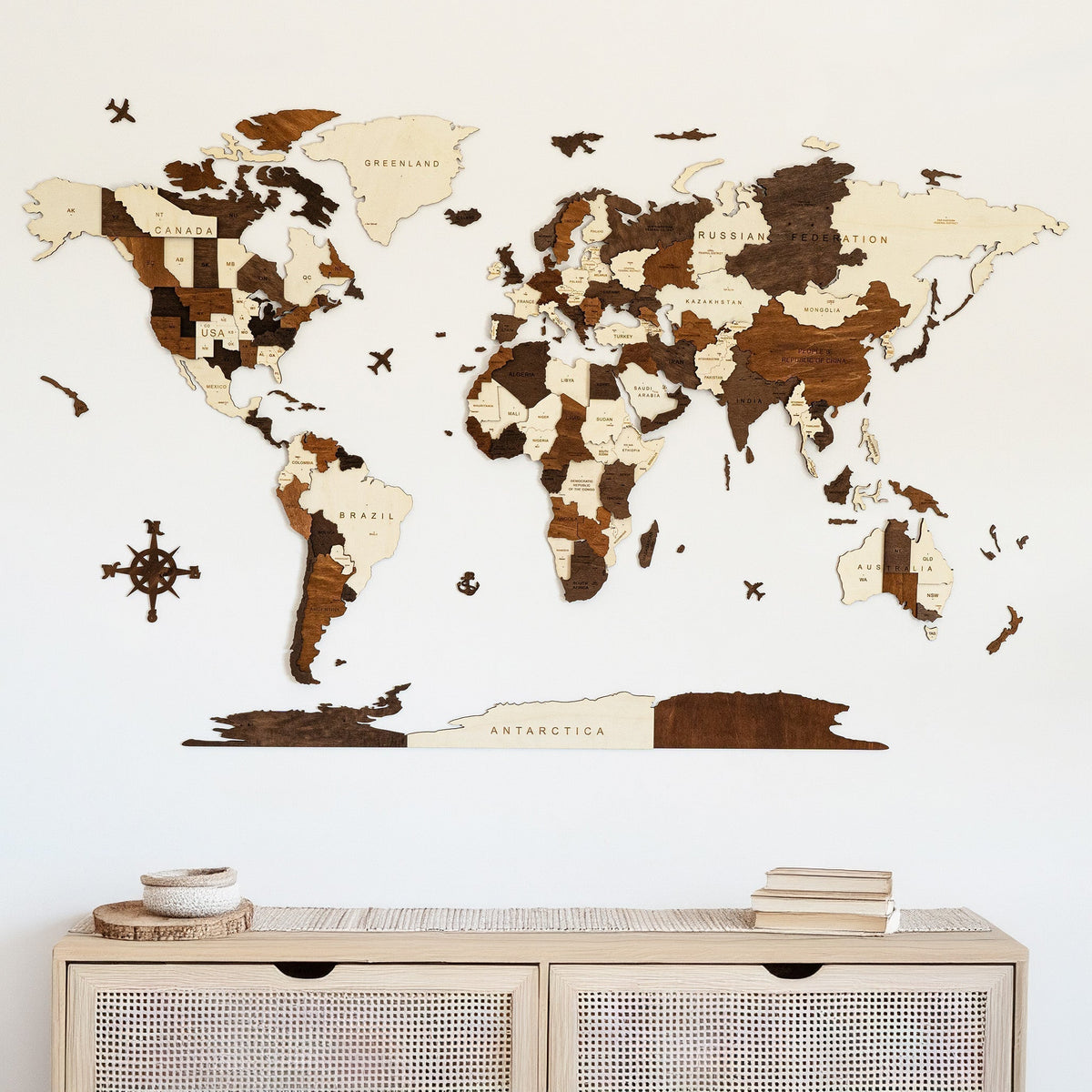
A map works well when your memories span several places. It gives the display one clear centre, while pins or other markers add the personal detail.
Choose cork if adding pins is central to the way you want to use it. Choose a layered wooden map if you are drawn to the shape, grain and depth of the map itself. Check the mounting method and compatible accessories for the particular design before ordering.

3. Frame the paper you kept
Tickets, a handwritten itinerary or a restaurant card can be more personal than another landscape photograph. Place a few related pieces in one frame with space around them, rather than filling every gap.
Keep delicate originals away from strong direct sunlight. If a ticket is fading or irreplaceable, display a copy and store the original. The memory is still there, without putting the only version on show.
4. Make room for places close to home
A travel wall does not need to be a record of long-haul flights. The town where you met, a favourite coastal walk or the city you now call home can carry just as much meaning.
Pair a place-based artwork with one photograph or a short handwritten note. For someone with a connection to Portugal, a wooden Portugal map can keep the display focused on that one place rather than the whole world.

5. Add landmarks as little reminders
A miniature landmark can mark somewhere you loved visiting or somewhere still on your list. Keep the distinction simple: you could use flag pins for visited places and wooden landmarks for a handful of favourites.
Wood Nest’s wooden landmarks come as a set of 36, with adhesive backing, and work with our wooden and cork maps. They are decorative pieces that stick onto the surface; they do not work like push pins.

Make the display feel part of the room
Repeat one or two materials already nearby, such as oak, walnut or black metal. Leave some empty wall around the display and keep the furniture underneath relatively simple. A map above a sideboard usually needs fewer surrounding objects than a small framed print.
Before making holes or applying adhesive, check the wall surface and the mounting instructions for every piece. A collection of memories should be easy to enjoy, not something you have to keep adjusting because it was poorly positioned.


Partager:
Le top 10 des destinations à ajouter à votre carte de bois !